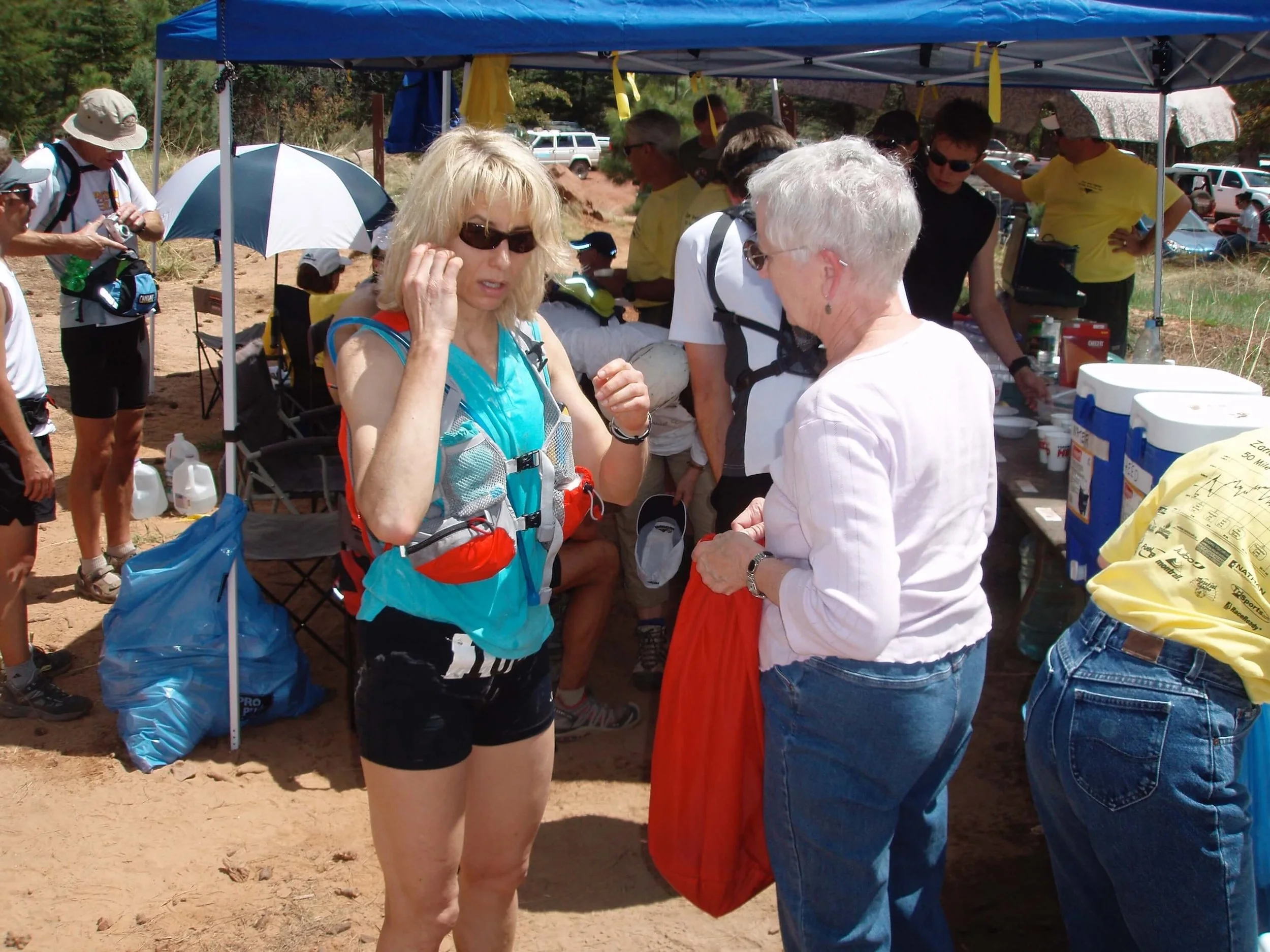
Picture this: you're at mile 60 of a 100, you're wrecked, and your pacer is telling you what to eat. Your crew is debating whether you should sit down or get out. Everyone has an opinion. And you're just...going along with whatever they tell you. Whoever is the most insistent or loudest.
Over 25 years of ultrarunning, I've watched this happen to countless runners. I see it out on course, and I see it with my coaching clients - often before they can see it themselves. And I want to name what's actually happening in that moment, because most runners don't recognize it until after the race when something feels off and they can't quite say what.
You've handed your race over to your team. And it's hurting you. And them.
How it Happens
It doesn't start as abdication. It starts as overwhelm.
Ultrarunning asks you to make consequential decisions when you're not in the best shape to make them - when your brain is foggy, your emotions are all over the place, and the cost of getting it wrong feels enormous. The uncertainty is real. The risk is real. And at some point, that weight gets heavy enough that you stop wanting to be the one carrying it.
Having a crew and pacers seem like the perfect solution. You're not in this alone. They want you to succeed and eager to help. Let them help carry it. And, you think, the more experienced they are or the faster they are, the better they’ll be at helping you.
That's the moment the race starts to slip out of your hands.
What Abdication Actually Looks Like
It's not dramatic. It's a hundred small moments of deferring to them instead of using their input to decide. You ask your pacer what you should eat when you already know. You let your crew call the shots on whether you sit or keep moving. You stop being the person running your race and start being a passenger in it. Often, nobody points it out. It just happens.
And here's the part that makes it hard to see clearly: some crew members and pacers genuinely like that authority. They'll take it. Not maliciously — they want to help — but once that dynamic is set, it's hard to walk back mid-race without blowing something up.
The Damage Underneath
Maybe you finish. But in my decades of racing alongside other runners and coaching clients through this, I've watched people cross finish lines they don't fully own. They did it, technically. But they're not sure how. They couldn't tell you what they're actually capable of, because they never had to find out.
And then they say it out loud - ”I couldn't have done it without them” - which is nice but the more they say it, the more they believe their capability extends only as far as their support does.
After the race, things get complicated. If it went badly, there's blame floating around — spoken or not. If it went well, there's a nagging doubt about the accomplishment. And then the next race comes and they need the same configuration of support, because they didn’t build their capability in that race. So they stay dependent. They don't evolve. They just keep hoping they can line up the right people every race.
That's not mastery. That's managed dependency.
What Actually Works
I'm not saying don't have crew and pacers - I’ve used them once or twice. I'm saying you have to stay in charge of your race.
You are the CEO. Your crew and pacers are your staff. You ‘hired’ them. So you set the terms. You train them to do the job.
Tell them specifically what you need, how you want to be spoken to at mile 70 when you're struggling, what kind of input helps and what doesn’t.
And then - this is crucial - you make all the decisions. Even when you're exhausted. Even when you're uncertain. Especially then.
They can advise you, but you make the decisions.
That discomfort - making calls when you don't feel like it, holding the weight of your race even when you'd love to set it down - that’s the actual work. That's where you build mental mastery.
It’s the very reason I created a detailed crew and pacer guide for my clients - to prepare them, their crew and pacers, because this stuff has to be set up before the race. The decisions runners need to make and the conversations most runners skip - the ones about roles and authority and what support actually looks like, down to the scripts that work - those are critical in making the team work.
The runners who do this work ahead of time have better races and better relationships with their crew - before, during and after the race.
What You Get on the Other Side
When you approach your race this way, everyone's clearer. Your crew knows exactly what they're there to do and how. Your pacer isn't guessing or overstepping. There's no ambiguity, no blame, no uncomfortable conversations to have after.
And you know you made that race happen. Not your crew. Not your pacer. You, with the help you defined that you wanted from them.
That certainty compounds over time. It's what separates runners who finish a race from runners who progressively get better at ultrarunning. You stop needing everything to have the perfect help lined up before you can attempt something hard. You become someone who can execute regardless of who shows up to help, because the capability lives in you now.
So the question isn't whether to have pacers and crew. It's whether you're willing to stay in the driver's seat when it gets hard - or whether you're going to keep handing the wheel to people who ultimately can't drive this race for you.
