You Were Never Going to Train in a Straight Line
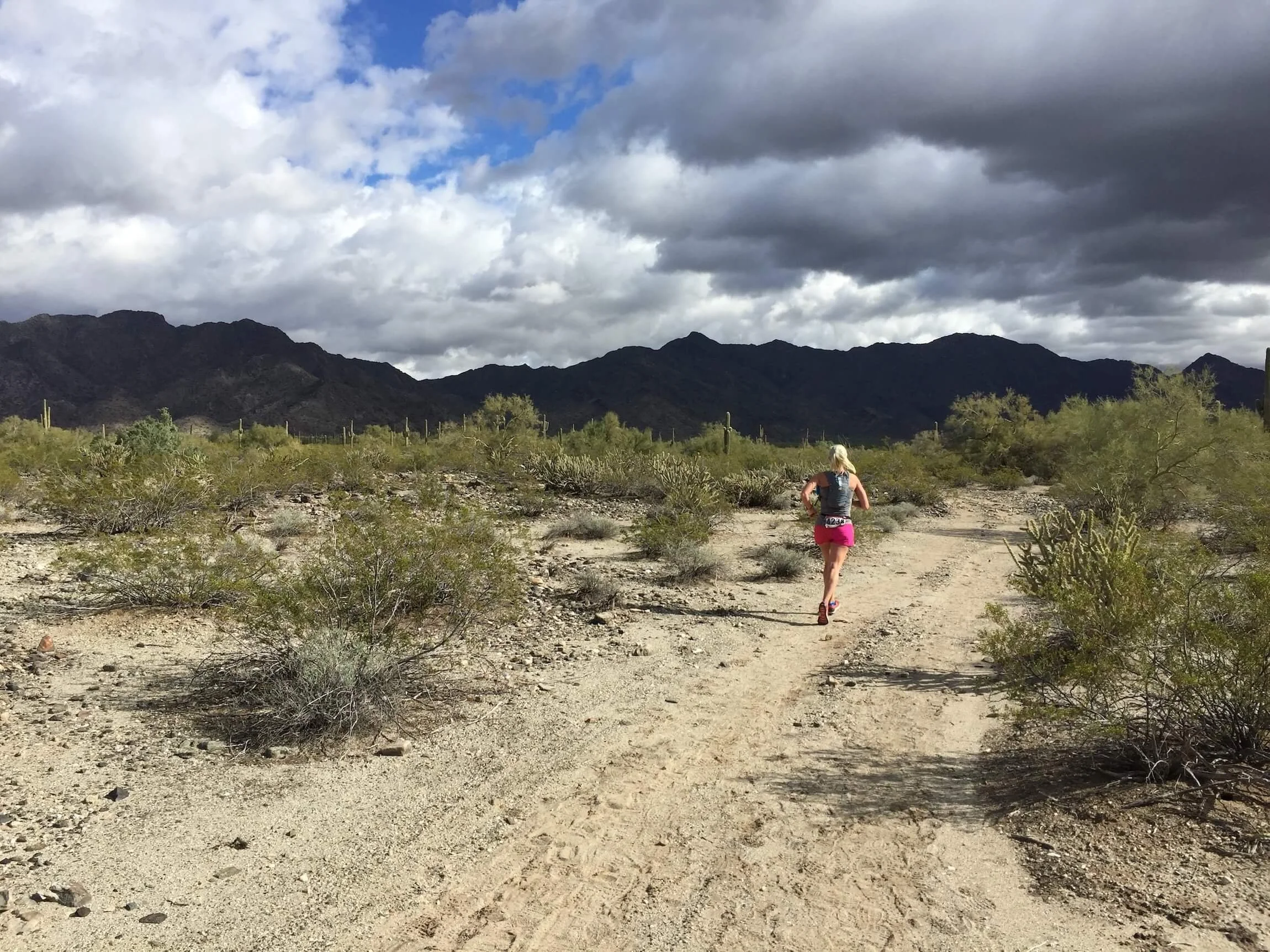
In the back of your mind, there's probably a picture of how training is supposed to go.
You start at A. You progress steadily through training. You arrive at the finish line at B.
If you're doing it right.
I see this in almost every runner I work with.
So when things don't go that way - the long run you had to cut short, the week you were sick, the weeks life intervened and the mileage didn't quite happen - it becomes evidence your race isn’t going to be a good one. Proof that something went wrong. That you weren't committed enough, consistent enough, good enough.
And you carry that into the race. You start already waiting for it to disappoint you.
All because the line wasn't straight.
Here's what's worth seeing: that picture was never realistic. Progress in the real world is never going to be a straight line. And the rigid A-to-B version isn't just wrong — it's fragile. One thing goes sideways and that whole picture falls apart.
What's stronger is seeing progress as a zig-zag. A line that moves in directions you didn't plan and still gets you to your goal, and even beyond.
I’ve never had that straight A-to-B line. Here’s a typical one - a recent long run in the mountains where I'd planned 27 miles on a loop course that gradually gained, then lost altitude. When I reached the farthest and highest point, I found the next trail down was badly overgrown. I gambled it would open up as I descended. It did the opposite.
The vegetation was cutting my legs so badly and so often that I had to use a heavy stick to break trail, walking. I ended up cutting the run 7 miles short - shorter than the previous week, not longer - just to get back to the car by dark.
But I got 20 quality miles in, on technical trails, in the mountains. Harder, better, and more beautiful than 27 miles on a flat gravel loop. And I re-learned to check trail conditions before committing to routes with rarely-used trails - or at least have a backtracking plan. It helped me choose a better route the following weekend.
And I just didn't stress about it. It was a zag. Not a sign my race would go poorly.
Not pretending the detour didn't happen. Not forcing positivity. Just deciding to get everything out of it you can instead of using it as evidence against yourself.
Detours are rich in learning you wouldn't have gotten on the straight path. They also give you practice adapting - which is a required skill in any ultra.
The steps that look like they're backward don't have to be. Find the value in them and use it.
That's not falling short of progress. That is progress.
