The Blog
Tips, ideas, and true stories to build your ultra confidence.
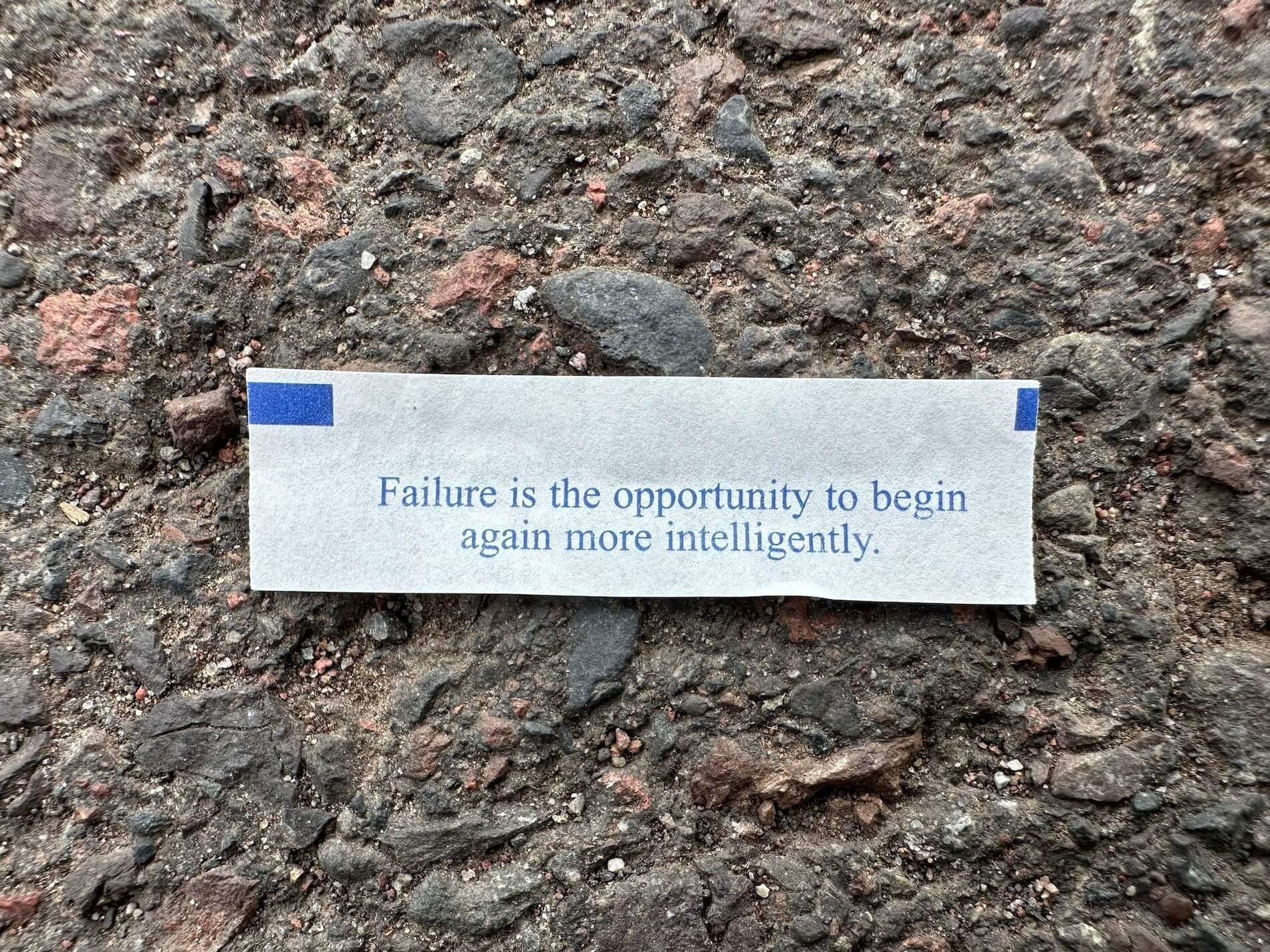
How to Recover From a DNF
A DNF can be painful.
You invested time, trained hard, and ran your best, but it wasn’t enough for a finish.
Our first reaction is to move on quickly and forget about it. You might feel the urge to take a break from running, shift your attention to the next race, or sign up for a ‘redemption race’ to prove the DNF was a fluke and restore your confidence.
These seem like the best ways to bounce back, right?
But here’s the catch: when you rush to move past the DNF, it can linger in your mind, growing into something bigger than it really is.

Negative Thinking in Ultras: What to do When it Hits
Is your reaction to negative thinking, “I shouldn’t think this?”
You might believe that good ultrarunners don’t deal with negative thoughts. After all, negative thinking can make any race miserable, and if left unchecked, can spiral out of control and ruin it.
Since you know what you should be thinking—positive thoughts—the solution seems obvious: replace the negative thoughts with positive ones. Simple, right?
But when that doesn’t work and negative thoughts keep creeping back in, it’s frustrating.
Become Unstoppable
You can be unstoppable - starting today.
It doesn’t matter if you’re slow, back of the pack, or have DNF’d a bunch of races.
The only thing in your way is a simple thought error that’s easy to fix - thinking ‘unstoppable’ means you don’t DNF.

How to Beat Pre-Race Anxiety
When you sign up for an ultramarathon, you’re excited.
You imagine running it bold, strong, and powerful.
But as the race approaches, the excitement is replaced by anxiety.

Walk Away Stronger: How to Gain Confidence From a DNF
One weekend in July, three clients faced three of the toughest mountain 100-mile races in the sport.
None of them finished but all of them accomplished more than that and walked away with the massive jump in confidence you’d think comes only from finishing.
Here’s the five things they did to make that happen.

Bad Ultramarathon Logic
Ultra logic can be as faulty as ultra math.
(And we know what bad ultra math can do.)
Take these five logic examples from my weekly coaching sessions with clients:
“Everyone is running fast, so I need to.”

How to Know You’re Ready for a 100
You need three things to be ready for a 100-mile race.
And they aren’t what you think.
It isn’t experience. You can have years’ worth of ultramarathon experience and not be ready.

Before You Compare Yourself, Do This
A client was talking about her fall races with another runner, when the runner commented that Western States was really hard and the runners in it highly accomplished.
My client got angry in the moment but blew it off. Later, though, she questioned her own 100s and how they stack up to that type of big name event - Western States, Hardrock, UTMB and The Barkley
Of course negative stuff surfaced, so she asked me why a small statement creates so much negativity.

The Antidote to Fear
The antidote to fear is curiosity.
When I signed up for my first 100 mile race, Superior 100, I could have faced fear.
The longest I’d run was 50 miles. I knew people ran 100-mile races but the distance was too immense to hold in my brain at one time, which was worrying. I had no idea what running 100 miles would be like or what could go wrong.

How Realistic Goals Limit Your Potential (And What To Do About It)
When it comes to setting a race goal, it’s easy to choose one that’s “realistic.”
We believe being realistic is the best way to ensure we’ll finish. Realistic = finishing.
The opposite of realistic is aiming high. It will lead to a DNF, disappointing yourself and others, and looking foolish. Aiming high = aiming too high = irresponsible.

The Evidence Bank
“Wow. I run there.”
Every time I drive to Knoxville I crest one particular hill where Knoxville sprawls ahead but beyond it stands the long, imposing blue ridge of the Great Smoky Mountains National Park.
Here I am in the car on the way to shop for groceries or get my hair cut. Everyday, ordinary life stuff.
And there lie the mountains, impossibly high, remote and commanding.
“I run there.”

The One Thing You Always Control
Your race is a big deal and you want to make it the best it can be.
You work hard to make sure everything goes as planned - pace, nutrition, hydration, pacer, crew, drop bags, aid station stops…
So it’s frustrating when things outside your control sabotage that.
That’s where I was two weeks ago in Ring the Springs 100.

Why Time Off Can’t Set You Back to Zero
Over the years, I’ve watched clients take breaks from running. One thing I notice is how hard it is to take an actual break until it becomes a crisis, when they’re forced to take a break.
Why do we have to be forced to take a break instead of taking one when we need to?
One of the main reasons for runners is the fear of having to start all over from zero.

Overcoming Cutoff Stress: A New Approach
We all know cutoff stress.
Making cutoff is the most basic thing you need to do to finish most ultras, and being anywhere near it can be stressful.
Miss one cutoff and your race is over.

Blisters to Headlamps: How to Solve Any Race Problems
A runner returning for her first ultra in years asked my opinion for solving toe blisters.
She encountered her first ones on a long training run and her race was a week away.
She asked other runners for solutions and got great tips to try - various tapes and lubes - but was nervous because she didn’t have time to try any of it, so she asked me for a strategy.
Here’s how I answered…

How Social Conditioning Can Cost You a Race
In the dark at Massanutten 100, I rolled into the Camp Roosevelt aid station highly aware I was later than I’d ever been but happy to be there at 63.9 miles with a long section safely behind me.
I focused on business. This year’s race was taking a lot out of me and I needed to sit for a moment with my drop bag to get gels and a spare headlamp for the 5.8-mile section ahead to the Gap Creek aid station. My headlamp was already dim and wouldn’t make it through the next section.

Perfect Is The Enemy Of A Great Race
This is your one big chance.
You got in the lottery for a big race and you’re determined to make the most of it.
Everything has to be perfect.
You’ve got to train right, eat right, race exactly right…do everything right.
But that’s where it goes wrong - needing to be perfect.

From Miserable Slog to Peak Experience
Finishing an ultra - enduring a crazy number of hours and miles over a challenging course most people wouldn’t believe - is hard enough without adding intense mental and emotional difficulty to the race.
Negative thinking can turn a peak experience into a miserable slog you just want to end.
For example, this weekend, I got a terribly late start for a 20 mile long run in the mountains.
How do you tell?

Hard Training or Burnout?
“Training hard or burned out…which am I?”
You’re putting in a lot of hard miles but getting a little tired and cranky.
You want to train hard so you’re ready for your race but not so hard you get burned out.
The stakes are high. Your race is on the line, so you don’t want to get it wrong.
How do you tell?

How to Lower the Cost of Failure
A client recently asked, “I have an intimidating goal race this time next year. Registration is open and there’s a cap on the number of spots. Should I sign up now or wait a bit?
“Can I train for a big event and sign up at the last minute?”
Sure, but what’s more interesting is why?
Grab your copy of New Thoughts to Believe
Lorem ipsum dolor sit amet, consectetur adipiscing elit, sed do eiusmod tempor incididunt ut labore et dolore magna aliqua.