61. If I Can't Run, Am I Still an Ultra Runner?
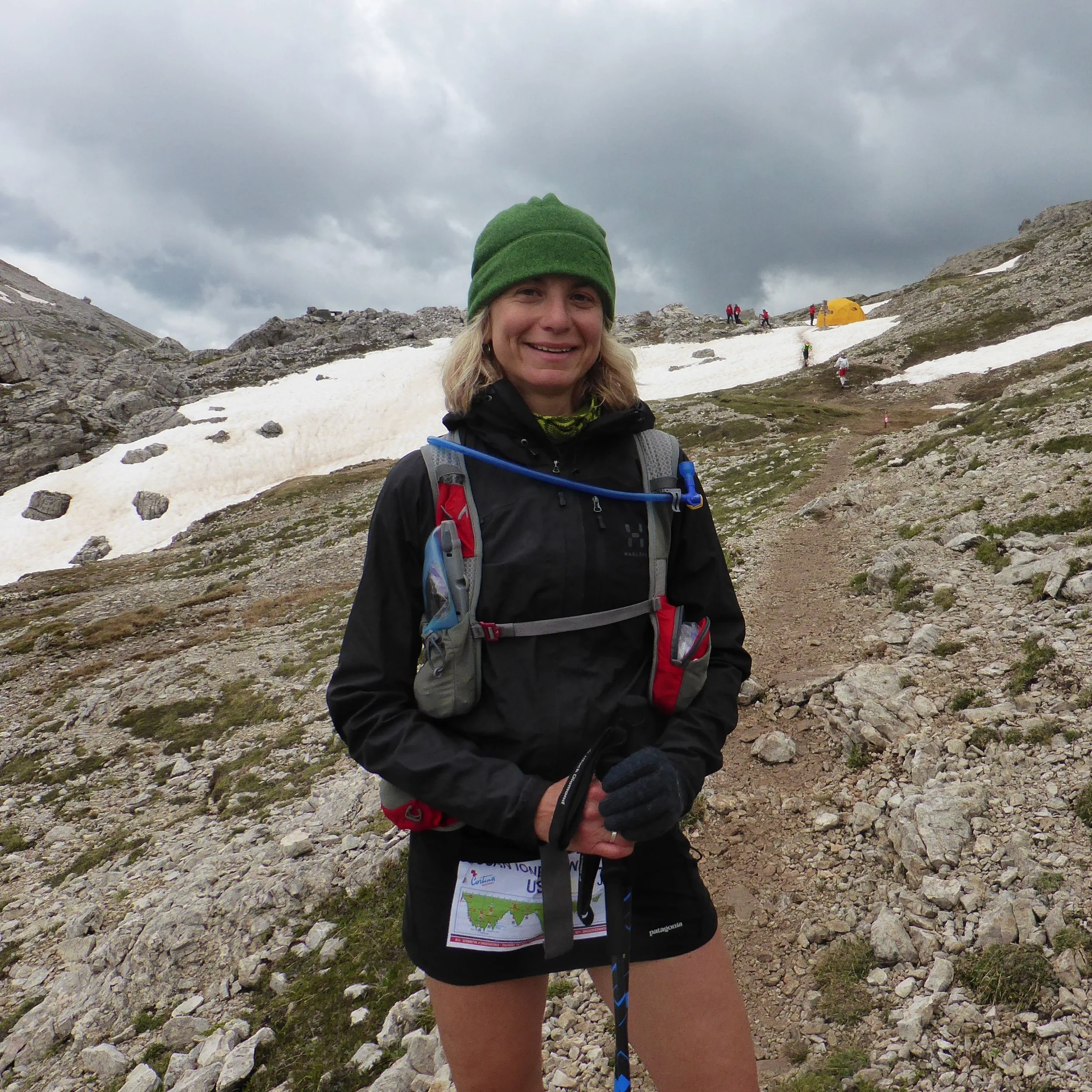
If you can't run ultras right now, are you still an ultra runner? It's a question no runner wants to ask, but injuries, DNFs, setbacks, and major life changes have a way of forcing it into the spotlight. When running is a big part of how you see yourself, losing the ability to run can feel like losing a part of who you are.
In this episode, I share my own experience of facing that question after two difficult DNFs, six months without running, and a hip replacement. I explore why so many runners assume they're no longer ultra runners when they're sidelined and how tying your identity to running instead of to who you are creates unnecessary suffering.
You'll discover why identity is self-assigned, not circumstance-assigned, and how to stay connected to the ultra runner you are even when you can't train, race, or finish the way you want to. Whether you're injured, struggling with results, or worried about what the future holds, this episode will help you answer one of the hardest questions an ultra runner can face.
My 1:1 Mental Mastery Coaching for Ultrarunners is a six-month coaching program where we build the mental skills experienced ultrarunners use to handle difficult races well. Schedule a consult call to learn more here.
What You’ll Learn from this Episode:
Why injuries and setbacks can create an identity crisis for runners.
What identity dissonance is and why it feels so painful.
The mistake runners make when they tie their identity to results.
Why being unable to run doesn't automatically make you a non-runner.
How to think about your identity during injury, recovery, or a break from racing.
Practical ways to stay connected to your ultra runner identity.
Why you get to decide whether you're still an ultra runner.
Listen to the Full Episode:
Featured on the Show:
The Ultrarunner’s Mastery Debrief Template helps you evaluate your races like experienced ultrarunners do - identifying what worked, what didn’t work, and what to do differently next time. Download yours for free here.
If you’re loving the show, please take a moment to follow, rate, and review wherever you listen to podcasts today!
Episodes Related to Your Identity as an Ultra Runner:
Full Episode Transcript:
Welcome to Unstoppable Ultra Runner, the podcast for ultra runners who refuse to let anything hold them back. I’m your host, Susan Donnelly, veteran of over 150 100-mile races, and a coach who helps runners like you break through mental roadblocks, push past doubt, and run with confidence. Let’s go.
Welcome to episode 61. Today, we're talking about a question that no ultra runner likes to consider. If I can't run ultras, am I still an ultra runner? I've had a lot of personal experience with this lately. Two tough DNFs in a row and then six months of not running leading up to a hip replacement on Monday of this week. So, I'm rehabbing right now. I am still on a walker. I have an ice pack on my hip right now as I'm recording this. I am certainly not ultra running. I am definitely not even running.
So that thought jumped into my head. I'm not even a runner anymore. And the question, "Am I still an ultra runner?" when you think that you aren't, is a really painful one. And it's a common question from runners who are injured or fear that they are. It comes up for those who are facing an unknown like a hip replacement like I did: What if I can't run ultras anymore? What if I lose my ability? It comes up for runners who are injured, for those who aren't finishing races, for older runners anticipating what might be ahead. And I'm going to talk in this episode mostly about injury here just as a shortcut. But it's the same cause and the same effect and the same solution for all these runners in all these situations.
So in this podcast, when I say injured and I talk about injury, I'm really talking about anybody who's been sidelined and who is asking that question, "Am I still an ultra runner?" Whether that's coming from a physical injury or a string of DNFs that has you questioning whether you belong in ultra running anymore. The one question that all these runners are asking, the question I'm talking about here, the question I was asking, is the same: Am I still an ultra runner?
This is what's called identity dissonance. It's the psychological friction that you feel when you're holding two conflicting self-concepts about yourself at the same time. You're an ultra runner, and now, maybe you're not. Without warning, you suddenly feel like an outsider, cast out of the tribe, on the outside looking in. You were running races, comfortable with your ability and reaching for more, and now all that's gone.
You're injured and not finishing races, and the voice inside your head starts saying things like, "I'm not an ultra runner anymore." And, "Maybe I'm a used-to-be ultra runner now." The other day, I went to a local cafe here, and as I got out of the car, I saw a group of runners, post-run. Happily chatting and laughing in the parking lot outside with water bottles and gear, like I have done so many times over the decades. I know that feeling so well. It's almost innate to me. I know that bliss. But that day, I felt invisible.
Just another non-runner patron going in for coffee. Not even another person that they'd look at and identify as a runner and say, "Hey, are you a runner?" Like nobody outside the tribe. It happens in moments like that and in all kinds of other ways. You see others posting about races online. You see them posting about races you want to run. You see the email that the entry is open to the race that you were hoping to run and dreaming to run. You drive by the trailhead you used to run at all the time. Except this time, you glance over and have to keep on driving. Injury and starting to not finish races that you should upends how you see yourself. Suddenly, you don't know who you are.
And even if you call ultra running a hobby, your identity as an ultra runner isn't just a hobby label. It's the part of you that decides what you're capable of, what dreams to reach for, and who you want to be. When injury strips the activity away, there's this gap between who you've been all this time and who you are right now, and that gap hurts almost as much as the physical injury. You were going for bigger races, excited about what you could do, dreaming about possibilities, expanding who you thought you were, and this pulls you backward in a direction you don't want to go.
Runners in this situation react in two general ways, depending on their timeline. If their expected timeline is short and finite, most runners focus on rehab and tune everything else out just to get back to it, make it as short as possible. But in the meantime, they fight being injured and grieve not running like they did and the races that they have to miss. Oof, that one hurts. Believe me, I know. Even if they crew a friend at a race or work in an aid station, they still feel like an outsider, not a runner of the race, just a spectator to it. I've been there.
But if the timeline is longer or unknown, or it might signal the end of running, runners rightly get depressed or decide that building their identity around ultra running was a problem in the first place. So they often walk away from what they call a mistake and build a new identity outside the sport. In other words, they find another tribe. But at the end of the day, the result of both of these groups is that they grieve the identity they've lost, whether that's being one of the runners that day and that race that they were planning to run, being a part of that shared experience, or whether that's being somebody who never races again.
But notice, they never answer the question for themselves. Am I still an ultra runner? Do I still belong? They assume the answer is no. So everything they do after that comes from not being an ultra runner anymore. And that assumption comes from where they're looking for the answer. They're looking in the wrong place. Most runners let external evidence define their identity. I'm a runner because I run. So when they can't run, the identity disappears and they're left drifting. That's the real trap here.
Tying your self-definition to an action like running ultras or an outcome like finishing 100-mile races rather than to something you own inside, to who you are inside. And here's the point I really want you to get in this episode. You get to decide whether you're still an ultra runner. That's the answer to that question. Identity is self-assigned, not circumstance-assigned. The world and circumstances do not get to assign your identity, do not get to tell you whether you're an ultra runner anymore. The injury doesn't get a vote.
In case you're thinking, "Well, you can't be an ultra runner until you finish an ultra, right?" I'd technically agree. But also, identity isn't black and white. It's not something you either are or aren't. It's something you're building all the time. You're building different levels of it. That's why I talk about mental mastery, not just finishing an ultra but gaining mental mastery, building that. And you were building that ultra runner identity before your first ultra. You were becoming an ultra runner.
The identity didn't start at your first finish line, and you know that. It started when you decided that this was who you were going to be. When you signed up, when you made that commitment to do that race, when you started training for it. Identity is in who you decide to be, how you decide to think and feel and act. So in other words, it's your decision rather than your achievement. It works the same way when you're injured or not finishing races, either one. You get to decide, "I'm still an ultra runner."
That's what I did when I wasn't finishing races and then not even running. I decided, "I'm still an ultra runner." An ultra runner working on fixing a problem at the moment. And then, eventually, I'll get back to races. If you decide to take a multi-year break from ultra running, let's say, you can still decide you're an ultra runner. An ultra runner taking a break or on hiatus. I had a fantastic client that at the moment, the way her life was arranged and where she lived and everything else, wanted to get back to loving the training but didn't necessarily want to race. And that's totally fine.
And she decided she was an ultra runner anyway. Just one who didn't want to race at the moment. Maybe someday, but not right now. And finally, even if you never race again or never finish another race, that circumstance still doesn't automatically mean you're not an ultra runner. You can decide you are and still think and feel and act that way. I had to consider this scenario when I was facing this hip replacement. And one example that jumped to mind for me was the skier Lindsey Vonn.
If you don't know her, she's an American Alpine ski racer who's a four-time World Cup champion and Olympic gold medalist, the first one in that sport for an American woman. And she's currently recovering from a severe, devastating, don't watch the clip, downhill crash during the recent Winter Olympics. And she is described everywhere as "skier Lindsey Vonn." Not ex-skier or former skier or former Olympian. Just skier. And take artists. We don't say former artist or ex-artist either; we just say artist. There are all kinds of examples when you look: painters, everything like that.
And one more thing, someone also asked about my identity as a 100-mile runner. Like, what if I never finish another one? And here's a thought that my friend Lynn told me sometime during the six years my hip was getting worse and I was struggling to finish races with it. She said, "Nothing can take away what you've done." To me, that meant nothing could erase what I had achieved, the body of work I created. but most important, nothing could take away who I became running those 153 100-mile races, who I had to become to do that. And that's 153 100-mile races so far, okay?
Because I'm still a 100-mile runner. And you just have to decide that's who you are. And you can do what I've done. When I met people, I was out walking, not running, and it came up, I just said, "I'm an ultra runner." Simple. And if they were confused why I was walking and not running, I told them, "I'm just injured right now." Not, "Well, I was a runner and I'm no longer one," or, "I used to be a runner." The present tense identity stays: I'm a runner. I'm an ultra runner.
The injury is just a modifier on the word ultra runner, not a replacement for it. Again, simple, but the wording matters. And if needed, you could explain why. Another thing I did through this injury and non-running time is approach everything as the ultra runner I still am. And you can do that too. Ask yourself, "What does the ultra runner I am do in this situation right now?" Let that identity make the decisions.
And one more thing I did that you can use is to make the injury or hiatus or lack of finishes a triumph story in the making for your identity. You're an ultra runner who is weathering a storm and will come out on the other side stronger for it. You're just in the process of writing that story at the moment. Deciding to see yourself as an ultra runner isn't just some feel-good reframe. It actually has practical consequences.
How you see yourself shapes how you make decisions during recovery, how you talk to your medical team if you have one, how you think about and treat your body, how you stay connected to the sport if you do, how you think about your future. Identity as runner during injury looks different and acts different from identity as injured person. The world and outside circumstances will try to define you by what you can do right now. Your job is to refuse that.
Decide who you are, and then let that identity lead your future. All right, you all, that's this week's episode. Thanks for listening. Stay tuned to next week, where it's going to be the third in the series that comes from my hip replacement about how you look to the future when everything looks bleak. So, if you know someone who could use this episode, share it with them. It might be exactly what they need to hear today. See you all next week. Bye.
Thanks for listening to Unstoppable Ultra Runner. If you want more ultra talk, mindset tools, and strategies for running with confidence, visit www.susanidonnelly.com. This podcast receives production support from the team at Digital Freedom Productions. That’s it for today’s episode. See you next week.
Enjoy the Show?
Don’t miss an episode, follow the podcast on Apple Podcasts, Spotify, RSS, or wherever you listen to podcasts!