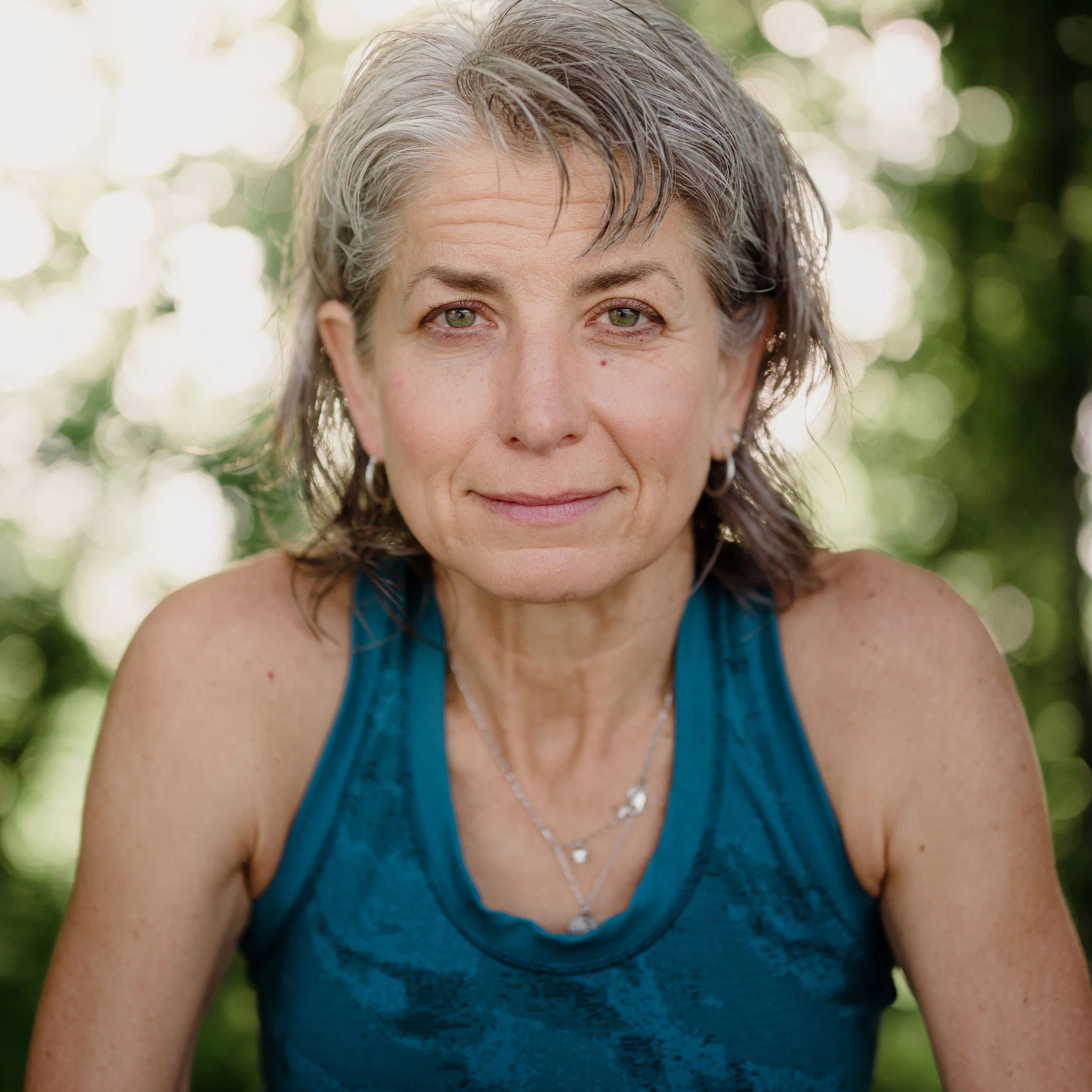
What do you do when life hands you a reality you never wanted? Whether it’s an injury, a DNF, a setback, or a fear that suddenly becomes real, the hardest part is often accepting that things are not going according to plan. In this episode, I share the deeply personal story of facing my biggest fear as an ultra runner and the lessons it taught me about making peace with what I couldn’t control.
Six years ago, a surgeon told me I had only a couple of years of running left before I would need a hip replacement. I spent those years doing everything I could to extend my time in the sport, but eventually I found myself facing the possibility that I might never run again. What helped me through wasn't avoiding that reality, it was learning how to accept it and keep moving forward anyway.
In this episode, you’ll discover the three mental mastery tools that helped me face an uncertain future, make difficult decisions, and find peace with a situation I never would have chosen. Whether you’re dealing with an injury, a race that didn’t go as planned, or a challenge completely outside of running, these lessons will show you how to move forward when life refuses to cooperate.
My 1:1 Mental Mastery Coaching for Ultrarunners is a six-month coaching program where we build the mental skills experienced ultrarunners use to handle difficult races well. Schedule a consult call to learn more here.
What You’ll Learn from this Episode:
Why resisting reality keeps you stuck and moving forward sets you free.
How to process difficult emotions without letting them stop you.
The role thought work played in navigating six years of uncertainty.
Questions that helped transform fear into possibility.
Why making your own decisions creates confidence and peace of mind.
How to stop waiting for certainty before taking action.
What mental mastery looks like when facing your biggest fear
Listen to the Full Episode:
Featured on the Show:
The Ultrarunner’s Mastery Debrief Template helps you evaluate your races like experienced ultrarunners do - identifying what worked, what didn’t work, and what to do differently next time. Download yours for free here.
If you’re loving the show, please take a moment to follow, rate, and review wherever you listen to podcasts today!
Episodes Related to Making Peace with What You Can't Control:
Full Episode Transcript:
Welcome to Unstoppable Ultra Runner, the podcast for ultra runners who refuse to let anything hold them back. I’m your host, Susan Donnelly, veteran of over 150 100-mile races, and a coach who helps runners like you break through mental roadblocks, push past doubt, and run with confidence. Let’s go.
Welcome to episode 60. This is an episode I have been thinking about for a very long time, as long as the podcast has been around. If you asked me what my worst fear is, it would be never running again, never even being able to walk again. And I've been facing that because when this episode airs, I will have a new hip.
Right now, as I record this, I've had my pre-surgery meeting, and the next step in a few days is surgery. One of the deepest fears I hear from ultra runners is injury and time out with loss of fitness. The longer it is, of course, the worse that fear is, having to start all over and never getting back to where you were. But what if it's worse than that? You might never be able to start over again. It's just gone. That to me is truly worst-case scenario, and that's what I've made peace with.
We're used to talking about the hard stuff, DNFs, bad races, injuries that set you back. Those are recoverable things. But not a lot of people talk about the irreversible stuff, the fears so final that they feel dangerous to even say out loud. So today, I'm doing it with my own biggest fear, because how you handle what you don't want determines how well you handle everything else. That's why you want mental mastery, not for the things that are going well. That's easy. For when something blindsides you when you least expect it. The runner who can accept what is and move to a solution the fastest is the one who finishes more reliably, keeps improving, and stays in the sport longer.
So, this episode is an example for you of what's possible even in an extreme case. And here's how I want you to listen to this episode. Think of your own situation in your mind while you listen to mine. Hold it in your mind. Think of that worst fear you have as an ultra runner. One thing you fear or maybe something you're in right now, something that's not the way it's supposed to be. And bring that into this episode. Don't just listen to my story, listen for yourself in it because making peace with a reality you don't want takes the same skills, whether it's an injury, a DNF, a race falling apart, or a body that's changing. My situation that you're going to hear here is just an example of it.
So, here's the story that you're going to need for context. In August 2020, I went to the best surgeon in the area that everybody recommended with a suspected labrum tear in my hip. And he said, yeah, it's probably torn, but he wasn't going to do surgery because I'd just need a hip replacement. He said, you have two years of running left. I couldn't breathe. It completely blindsided me because I was sitting there planning to run ultras for the rest of my life. I wanted to get this fixed so I could get on with it.
And I'm also the patient who doesn't need to check any of the boxes on the medical intake form. So it never occurred to me that this would happen. And then he said it was from all the miles I ran and that I was breaking every stride. In other words, my fault. Walking out of that office, I made the decision I wasn't going to tell anyone because this was mine to figure out. This wasn't the first time also that an authority figure told me what I couldn't do. My high school coach told me not to bother trying out for the college team, which cost me years of running that I can never get back. And I darn well wasn't making that mistake again.
So, as devastated as I was, I was going to prove him wrong. That was now my mission. I decided to do everything I could to help my hip last as long as possible while still enjoying ultras. So, I decided fast didn't matter anymore, finishing did. I gave up my beloved hills and trained on flat, easy dirt. I walked the downhills as well as the uphills. I ran flatter courses like Lean Horse 100. I mixed in more walking just to finish ahead of cutoff.
I also decided to 10x the mental mastery I'd built, this awesome strength I had, so I could use my mind to fill in the gap that my body couldn't. And yeah, I finished some races that way, but I also started DNFing again. This time for physical reasons, not mental. When I started out in ultra running, it was mental, didn't DNF for decades, and now I'm DNFing for physical reasons. So to anybody who was running with me in from 2020 to now, this was some of what was going on in the background. Sometimes it hurt. And the race was taking literally everything I had to even attempt to run semi-normally on the not-so-great training I had. And I was focused so hard, sometimes I couldn't think of what to say.
So, last September, four years after that initial diagnosis, I decided to drop out of Superior 100 at 58 miles for what I was hoping was going to be, I think my finish number 22. And I dropped because it wasn't safe. For months leading up to the race, I did some Hail Mary training on hilly road pavement, but I walked the downhills and I ran the ups, and I just figured it was worth the effort, worth the expenditure. The race started well, but the pain and nerve issues grew stronger over the miles, and my hip started buckling when I was dealing with rocks and roots, the rocks and roots I love that trail for. So, at 58 miles, knowing the harder technical and bigger climbs were coming, I dropped. And that was a tough one to take, a tough hit to take.
Three months later, in early December, I had to stop running altogether. My last run was bliss until after, when I'm sitting in the car and the wave of pain that came over me was so extreme, I just had to sit there in the car and let it pass before I could even think about driving home. So I started PT, and I got the name of a top surgeon in Nashville doing hip resurfacing. He turned me down because my hip was too far gone, which was yet another blow. But I don't quit easily.
So, at the end of December, at Across the Years, which has been my last race to date, I decided to gamble that I could walk 100 miles in the 72-hour cutoff. Now hear me when I say that. 72 hours is a gamble for 100 miles. That's how unsure I'd gotten of my body. My hips in that race hurt so much that I couldn't sleep on nap breaks, but I walked that 100 miles with plenty of great company and cried somewhere around mile 80 and again at the finish line, just so grateful that my body had given me this one last race.
So, early January, my running's gone, and the pain was starting to limit my daily mobility, and I felt a clock start ticking. In January, I had a consult with the nurse practitioner for the surgeon who had given me that two-year life sentence on my hips years earlier. And in passing, she happened to mention that I had hip dysplasia, which is hereditary and made me prone to arthritis, which the surgeon never mentioned. A heavy weight, the heaviest weight of self-blame, immediately fell from my shoulders. My dad, who I take after, had both of his hips replaced and a knee starting around the same age I'm at right now, and he wasn't a runner. So this was going to happen whether I ran or not.
In March, I had a consult with another highly recommended surgeon and his nurse practitioner in Nashville, and it was excellent. I was psyched. I was ready. I had it all planned in my head, but then I asked the magic question about running. Flat out, no. So I was back to being devastated. But what he did do is explain implant choices, the health concerns with the old metal on metal implant, why I wouldn't be happy with a conventional hip replacement that he did, but he said there is one that might be perfect for you, and it's brand new. He said he'd heard about it at a conference, and the only catch was it wasn't available in the US yet. I'd have to go to Australia. But I wasn't going to give up before I had to.
So, I asked for a surgeon in Australia, and he gave me the only name he had. Deflated, I walked out of that office, asking myself if I was willing to go all the way to Australia for this surgery, a country I'd never been to and only knew a few people in. And before I even got to my car, I knew the answer. It was, yes, I can figure this out. I was the person who would go across the world to do this right. I went to lunch right after that and got on my computer and looked up the implant online and really liked what I saw. It was the healthiest hip implant and the one that would keep me the most active the longest, right now, as far as technology knows right now.
So then, on a whim, I checked to see if he might be wrong, if anybody did use it in the US, and I found a surgeon in Scottsdale, Arizona, near my mother and sister. Bingo. In April, I flew to Scottsdale for the consult. And I'm sitting in the waiting room there, and in the waiting room, I signed up for a consult with the Mayo Clinic two weeks later because if I'm the person who's going to go to Australia to do this right, I needed to at least check with the best. Now, the Scottsdale surgeon had extensive experience with that implant and he said I could run on it, that it was for 20-year-olds and active people. So, we scheduled surgery for June 1st.
Now, the Mayo Clinic, two weeks later, the Mayo consult was outstanding, and I really wanted them to do it. But their implant wasn't quite as good, and the nurse practitioner, even as good as she is, was shocked that I even asked about running on it. And the wait, if I went with them, the wait would have taken the rest of the year. So, that was a very reluctant pass. I really wanted them to do it, but Scottsdale it was.
And before I left Mayo, I asked about the dysplasia. And with my x-rays still on the screen, she showed me where there were more hereditary factors at play, and she directly contradicted what I told her the original surgeon had said. She said it eventually would have been a factor, hereditary factors would have stopped me regardless, and that what mattered was that I'd lived my life well on that hip. I walked out of there feeling like I had been holding my breath for six years, and I could finally exhale.
So, now, surgery scheduled, decision made, no more doors to open, no more options to explore. This was it. And here I am today, recording this. I'd be lying if I said I wasn't still terrified on some level. It feels very surreal, like this is something happening to somebody else and I'm watching from the outside. The finality of it still lands on me fresh every day. There's no undoing this. But none of that changes the decision, not for a second. So that's what making peace looks like. It's not the absence of fear. It's not that my hip magically got better. It's moving forward with the fear anyway.
It's been six months since I've run. I was kind of shocked to add that up. And it has taken a lot. And there are still some other things going on in the background, and I'm not yet on the other side of my new hip, obviously, but I am finally at peace with it.
Now, the one consistent thing I faced every day throughout this is resistance. I desperately did not want to be in the situation. I wanted it to be a bad dream. This was not how my life was supposed to be. I'd done all the right things, right when I'd finally retired and could go to as many races as I wanted. But that resistance to not wanting to be in that situation, this situation was keeping me stuck. It was keeping me spiraling. I was missing runs and races, but I wasn't solving anything either. I was trapped because I'd trapped myself in not wanting to move forward.
It was costing me. It was costing me my ability to walk. That dwindled down to one mile, three on a good day. Today, this afternoon after I record this podcast, hopefully three. I park as close as possible to a store and evaluate that and sit in the car and evaluate for a moment whether I can make it through the store and back. The same way I used to evaluate whether I could run a tough mountain 100. So hear me on this. You can't solve a problem while you're resisting it. You can't finish a race while arguing with the way things are in your head. Resistance costs you, and mine was costing me the life I wanted. And the only way out was forward. But it took everything I'd built in ultra running to get there.
I knew I was moving through grief, the grief cycle. That made complete sense, but knowing that didn't get me through it. Here's what did. Here are the three things I called on consistently throughout this entire six-year journey. I didn't decide these three things ahead of time, and there certainly wasn't a script to follow here. I just needed to use the mental mastery I'd built over the years and keep taking the next step forward. To me in my head, this was like finding my way through a forest of undetermined size, blind, but always knowing I could rely on an inner compass to guide me. And these are the three tools I reached for again and again.
The first thing I called on was feeling every emotion that came up fully without rushing past it to feel better. We're talking fear, grief, anger, despair, sadness, depression, not once, but over and over, every step of the way. The crushing disappointment each time I was sure this is it, this is the answer, and it wasn't. The frustration at every dead end, sadness for my faithful body that has always done its best for me. The days I felt completely trapped, the moments of depression when pain made everything, walking a mile, cooking dinner, sleeping, require effort that I didn't have. Bitterness at the unfairness of it, bone-numbing grief at the future I lost. I didn't have the energy to move forward, but I couldn't stay there either.
So, I'd pause for a morning or a couple of days, feel through all the feelings I was feeling, and then gather myself and take the next step. Not recharge, there was no recharging. I gathered myself. And I did it all in complete privacy. I didn't have the energy to manage anybody else's reactions and get through this at the same time.
So, privacy wasn't just a preference here, it was a protective strategy, a survival strategy because judgment and unsolicited opinions drain exactly the energy you need for your own process. And I needed that protection. Because in the very few people I told, I heard it. I heard, it's all those miles you ran, smugly, more than once. Everybody has her own agenda. I'm the only one who has me at the top of mine, consistently.
So in that privacy, I paid attention to what I was feeling and got curious about why I was feeling that. And I didn't immediately try to feel better. I gave myself permission to feel whatever was there and the safety to stay with it and not rush through it. And I used what I was feeling as information, as a signal for what I needed to do next. And the result of this was that I felt cared for and taken care of throughout the whole process. I wasn't rushed to make anybody else feel comfortable. And because I felt everything instead of pushing it away, the feelings didn't stop me. They told me what they needed to tell me, and like the messengers they were, they moved on when I listened.
Now, while I was carefully feeling everything, I also tidied up all the unhelpful thoughts that came along with them, with those feelings. And that was the second thing, thought work. Every setback, every moment of second-guessing, every wanting things to be different, I challenged it, the same way I have for decades in races and the same way I teach clients to.
Early on, I recognized that I was at a split in the trail. I had two choices. I couldn't keep going the same way. I had to either give in to fear or move forward into it. And the thought of letting fearful thoughts bully me was all it took. I took a deep breath, and I came out swinging fiercely at them, the same way I defied that surgeon's two-year death sentence on my running. It wasn't easy with the constant pain. Feeling pain and finding better thoughts is a lot of work to sustain for months and years on end.
I can't change the x-rays. I can't make my hip new again. But I was darn well going to walk across that battlefield towards those thoughts like a badass. I refuse to be a victim to them. And here's what I was up against. Here are the thoughts that cost me countless hours of sleep and made me like freeze in the middle of doing other things. I failed my body. This was my fault. I'm going to be weak and fragile forever. More people are going to judge me. Some already have. This isn't going to solve all my pain. I'm being too picky. I'm asking for too much, and I'm doing this wrong. My body has uncomplainingly given me its all my whole life. And here I am about to mangle it.
And then there's the big thought, the one that made me nauseous every time it surfaced. This is irreversible. You better get this right because there's no going back. That's what I've been living with for six years.
So every time those thoughts came up, what I did was challenge them with questions. My favorite, how is this perfect? Why is this exciting? What awesome things are possible on the other side that aren't now? And some of the thoughts I chose from those questions came out in gratitude. I love that hip replacement is even an option for me. If I lived 100 years ago, I'd be stuck with the pain. And I love that in the six years I bought for myself, the technology got better while I lived my life. I'm so glad I did the running I did and didn't wait for the perfect year or everything to be right. And life didn't ask me if I was ready to stop running, but it's also not telling me to. And what's on the other side could be great.
Other intentional thoughts I came up with really gave me some fierce forward momentum. And here's a little rampage of them, as a sample. If I'm going to do this, and I am, I'm doing it like a badass. This is an opportunity in disguise, and I'm taking it. I've got more than enough mental mastery for this. I am more than equal to this. This is what my faithful body needs to function at its best again. My health and quality of life are worth the highest level of time and care. I always find a way, and I'm going to find one here. I always find the wins in the race, whatever the outcome, and I'm going to find them here too. And let other people talk. It's just noise. I've got more important things to do.
So, day after day, as I'm questioning those really fearful, unhelpful thoughts and I'm thinking intentional ones, I started seeing not what I was losing but the opportunity opening up on the other side of my hip replacement. A former client has been hiking a gorgeous 250 plus mile trail and totally inspiring me. I can't do that right now, but I can when my hip is healed. So, the result of this thought work was that I gradually set aside needing things to be different. I grew more interested instead in what lay ahead of me. And I kept taking the next step I could see, occasionally looking up to check my direction and make sure I was going in the right direction, and then focusing back down on what was right in front of me, one step at a time.
And the third thing I did was make every single decision 100% mine. For six years, I got opinions and information from qualified doctors, nurse practitioners, and a friend who had his hip replaced and was running on it, but every decision was mine alone. And that was beyond important to me because this is my quality of life. As many life-changing decisions as I have had to make, and as tired as I got of making them, I needed to be at peace with them on the other side. I needed no regrets, no blame, no wishing I'd let somebody else make a decision. It would have been super easy to defer to a surgeon or a loved one with strong opinions. There is no shortage of people willing to tell you what you should do if you open that door.
But this was my hip, my life, my future self. I owed her my best thinking, not someone else's. The only way to feel good about this hip replacement was to own every step of this journey. No snap decisions, just clear ones. Most people in the situation would want instant resolution. I definitely wanted that too. But I was more willing to endure every bit of uncertainty that I had to get what I really wanted, which is my best chance to run again. That wasn't too much to want, and I am worth it.
So, I established my decision criteria first. Whatever option was the best for my overall health and gave me the best chance of being as active as possible for as long as possible, that was the option I took. That's how I found the implant I wanted. When Nashville said Australia, I kept looking until I found the surgeon in Scottsdale. That criteria, my criteria, saved me from settling.
Every decision you heard in that story, like which surgeon to use, when to keep looking instead of accepting an easy answer, which implant to use, which surgeon to use, which country to get my surgery in, when to schedule everything, all of it, I made every one of those decisions on my own, in private. I gave myself the freedom also to revisit decisions without calling it second-guessing. Checking decisions to me was reassuring. It reassured me that I was still going in the right direction, just kind of like checking my compass direction. And the result of this was I was able to make hard, life-changing decision after hard life-changing decision, cleanly and clearly. Everyone was considered, everyone was weighted against my criteria and made for my reasons.
Being able to trust yourself to take care of yourself through every hard moment, to know that when it matters the most, you're going to show up for yourself, that's one of the most valuable things you can build in this sport or anywhere. So, today as I record this, I'm on the edge of surgery and I'm at peace because I fought for that peace for six years. I created it for myself, and that's how I did it. Yes, I am nervous. I will probably go into it with sweaty palms, but I'd be dissociating if I didn't. Like any race, the outcome here is uncertain. And like any race, I've done everything in my power to control the controllables. There's no second-guessing.
The biggest emotion left is grief about the irreversibility of it, the finality. A few days left with my original hip. At some point the day before surgery, I'll walk one last mile on it and thank it for serving me so well for 63 years. But I'm thinking more and more about the adventures waiting on the other side, how I'll get my life back. I still revisit the decision every day, but it's less a questioning now and more of just this comforting ritual I do. It's a quiet confirmation that, yes, I'm going in the right direction. I've taken the best care of my body my entire life. It's been my highest priority since I was little. I saw how important it was. So to voluntarily cut out a piece of my body and replace it with man-made parts just feels violent to me.
But I want to be active again more than I want to maintain my original parts. And I'm at peace with that. I'm willing to make that deal. If I can walk through my worst fear like this with the mental mastery I've built in ultra running, so can you. This story is an example of what's possible. Making peace with a reality you don't want takes the same skills, whether it's a hip, a DNF, a race falling apart, or a body that's changing. So, go back to that situation you brought into this episode, your fear, the hard thing, your unwanted reality, and start where I started. Feel the emotions that you've been avoiding and get curious about why. Just that to begin with.
This is the first of three episodes sharing what this experience taught me. Next time, who you are as an ultra runner when everything changes. All right, you all. That's this week's episode. Thanks for listening. If you know someone who could use this, share it with them. It might be exactly what they need to hear. See you all next week. Bye.
Thanks for listening to Unstoppable Ultra Runner. If you want more ultra talk, mindset tools, and strategies for running with confidence, visit www.susanidonnelly.com. This podcast receives production support from the team at Digital Freedom Productions. That’s it for today’s episode. See you next week.
Enjoy the Show?
Don’t miss an episode, follow the podcast on Apple Podcasts, Spotify, RSS, or wherever you listen to podcasts!