50. The Truth About Aging in Ultra Running
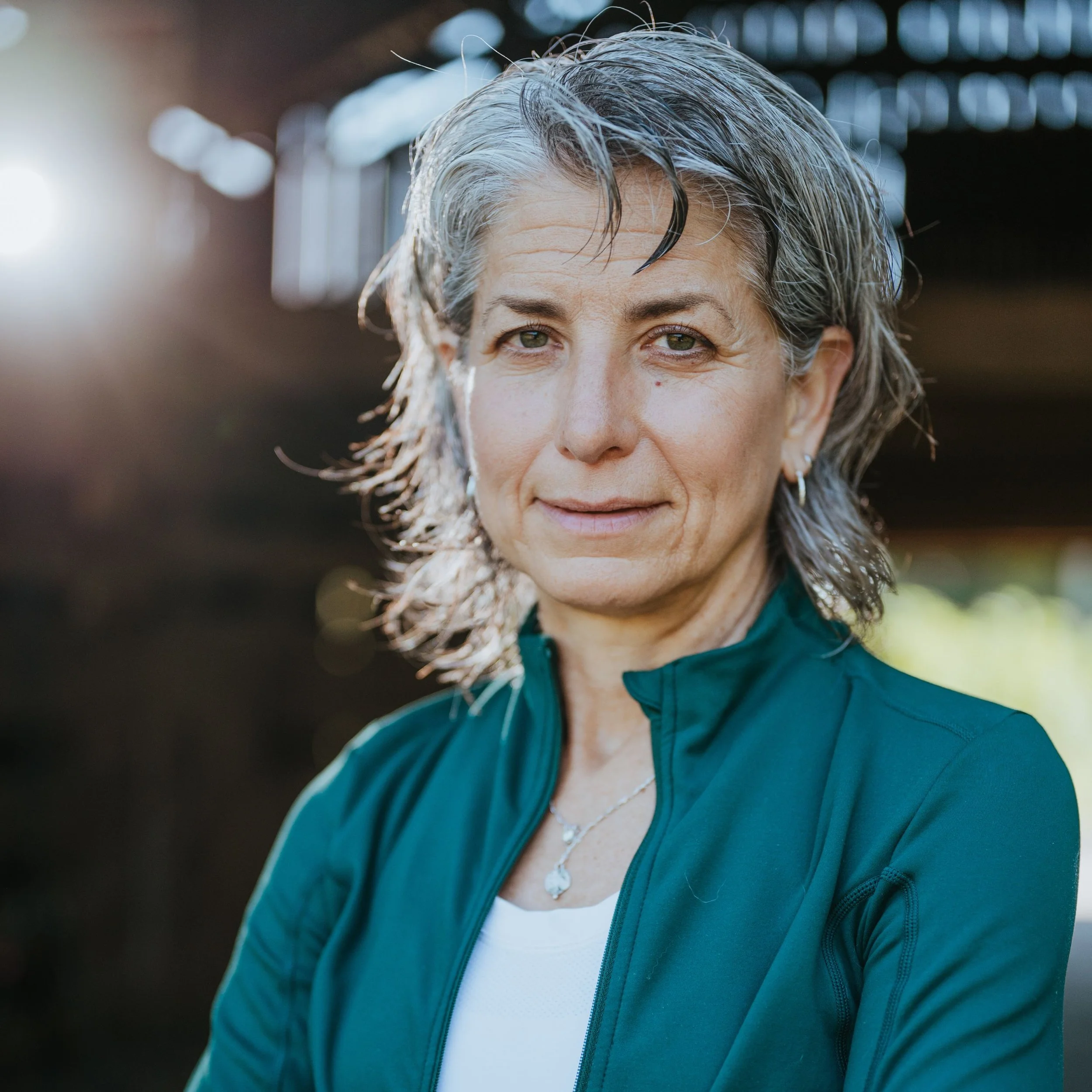
There comes a point in ultra running where the question shifts. It’s no longer just “What am I capable of?” but “Is there still a place for me in this sport as I age?” In this episode, I’m talking about something every runner who stays in the sport long enough will face: aging. Not as something to cope with, but as the next challenge to meet.
Aging changes your running, but the physical changes aren’t the hardest part. The hardest part is what it does to your identity. The gap between who you used to be and who you are now can feel uncomfortable, even threatening. And when you’re surrounded by messages that don’t quite fit your experience, it can make it even harder to think about ageing clearly or talk about it honestly.
In this episode, I share six ways to think about aging that have helped me and my clients approach this phase with more clarity, intention, and confidence. Because aging doesn’t remove you from ultra running. It asks something different of you. And when you approach it as something to master, not manage, this phase can become one of the most meaningful and rewarding parts of your time in the sport.
My 1:1 Mental Mastery Coaching for Ultrarunners is a six-month coaching program where we build the mental skills experienced ultrarunners use to handle difficult races well. Schedule a consult call to learn more here.
What You’ll Learn from this Episode:
How aging changes your running and why the identity shift is often the hardest part.
Why common responses like resistance and resignation don’t actually help.
How to approach aging as something to master, not manage.
Six specific ways to think about aging that make this phase more intentional and meaningful.
Why aging in ultra running can be a richer, more advanced phase of the sport.
Listen to the Full Episode:
Featured on the Show:
If you’re loving the show, please take a moment to follow, rate, and review wherever you listen to podcasts today!
Episodes Related to Aging in Ultrarunning:
Ep #11. Why Can’t I Finish? The DNF Question That Holds You Back
Ep #40. Belonging in Ultra Running: Run Like You Deserve to Be There
Full Episode Transcript:
Welcome to Unstoppable Ultra Runner, the podcast for ultra runners who refuse to let anything hold them back. I’m your host, Susan Donnelly, veteran of over 150 100-mile races, and a coach who helps runners like you break through mental roadblocks, push past doubt, and run with confidence. Let’s go.
Welcome to episode 50. Feels kind of fitting that a milestone like 50 episodes lines up with a topic this important: aging. Because aging, in its own way, is a milestone conversation.
I have seriously had a lot of questions for this episode and this topic. And when I asked in my free Facebook group, the women in there had a lot to say: experiences that they've had, questions, frustrations, things they wished were different. Some things that they weren't even quite sure how to put into words yet. And that makes sense because aging is one of those things that we're all living, but we don't always know how to think about it or want to think about it.
And I've been thinking about it a lot over the past several years for myself. As I said, I'm a newly minted 63. And honestly, that number still catches me off guard sometimes. In a somewhat challenging way, a "wait, really? What does that mean?" kind of way.
Because I never really had a picture of what this phase would feel like or look like. And I think that's true for a lot of us. I mean, we know what 20 looks like, and we know what 30 looks like, but 63? I think we as a society don't spend a lot of time imagining this part. So, sometimes I find myself asking, who am I at this number that I never really thought about being?
And here's what I've landed on. If you stay in ultra running long enough, aging becomes the natural next challenge that the sport presents for you to solve. And not as a side issue, as the main event. You stayed in the sport long enough to face this. You still love it.
So, today, instead of talking about how to cope with it, how to cope with aging as a runner, I'm going to talk about how to meet it—how to approach aging as the next phase of mastering the sport.
So, let's say this part out loud first, though, because it matters to name it: Aging changes your running. That's not a negative. It's just a neutral fact. And it doesn't always show up how you expect it to. It might be a slower overall pace, no matter how much you train. Or recovery that takes twice as long as it used to, or less agility on technical terrain. Especially on the downhills that you used to handle just fine. Or just being more easily tired doing the same runs that you've always done.
What worked might not work anymore or work in the same way. The same runs and races may take more intention and more effort. Or maybe starting to move out of reach.
But the physical stuff isn't actually the hardest part. The hardest part is what it does to your identity. You begin to notice that gap between what you used to feel was easy and now what takes a lot of effort. Between who you remember being and who you are right now. And we're looking over our shoulders at where we were at our best, our fantasy memories of our best, and making that gap between where we are and that fantasy into a problem. Wondering if you're still an ultra runner. And if it's still worth it.
There are assumptions and fears about what's ahead: mortality, things catching up to you that you've been afraid of or didn't even know were there, maybe.
We'd rather do anything than think about this stuff. And when we do try to talk about it with others, we often run into well-meaning responses that accidentally shut the conversation down: "Age is just a number." "You should be grateful to still be moving this well at that age." Those things may be true eventually, but hearing them before you've had a chance to work through what you're actually feeling about all this stuff, what you're feeling about what you're actually dealing with, can create shame around the whole subject, the feeling that your concerns aren't even valid.
And you shouldn't need to even think about this stuff at all. That makes it even harder for you to work through your own thinking about aging or to talk about it honestly with anybody. It's not a simple subject. It takes some time to really think about this stuff for yourself.
So, we try not to think about it. But when we do, it's frustrating, and we don't like where we end up. And there's definitely—I know this for sure—there's definitely grief in it too. Not overwhelming, bawling, crying grief, not dramatic, but it's there on this low-level, constant basis.
When you're younger, there's this sense that everything is still ahead of you. You have unlimited time, unlimited possibility. And at some point, that starts to shift. And it's hard to grieve losing the feeling of having a future full of potential. So, understandably, you avoid it. And the noise online about what you should and shouldn't do, or what a real ultra runner does and doesn't look like, doesn't help. There's just so much of that, and it can create a lot of shame too. This feeling that you might be making an irreversible mistake or falling behind some standard that you can't quite see clearly, or that you simply don't belong in the sport anymore.
Here's the thing underneath all of that, though. Aging doesn't remove you from ultra running. It removes the parts of the sport that maybe you used to be able to get away with winging. When you're younger, you can power through a lot of mistakes. You can power through bad pacing, starting too fast, sloppy fueling, all of that, letting your mind spiral late in a race. You've got plenty of margin. But over time, that margin shrinks, and the sport starts asking something different from you. It starts asking for more precision and more patience, more skill, more honesty with yourself.
Aging raises the standard. And I think that's actually more interesting than we give it credit for. Because it means what you need now, more than ever, is mastery.
The problem with our two most common ways of responding to aging is that both make this worse, not better. The first one is resistance. Fighting to be who we were, pushing harder to get back to performance that belonged to maybe a different body at a different time. And the second one is resignation. The dark humor version: "Getting old sucks," or "Getting old is for sissies." And while those can feel like solidarity and you love joining with other like-minded people to feel that solidarity, those things reinforce that aging is a problem. Or worse, you quietly give up. You stop signing up for races. You get stuck in an "I can't make that cutoff" thinking and never really try to get out of it.
Resistance and resignation are extremes on opposite ends of a spectrum. Neither one of those two things is mastery. And they're both just reactions, unconscious reactions, to something that actually deserves a response.
Now, mastery sounds different. Mastery, and this is the way I think of it, sounds like, okay, all right. This is the reality. Now, how do I work with it well? Not fight it, not avoid it, not give into it, but genuinely get good at it.
Because aging isn't just a limitation, it's a different environment. You already know how to do this. You've learned to race longer and longer distances. You figured out technical terrain and how to run it. You've adapted to conditions that were hard at first and turned them into something you knew how to do. You figured out nutrition and hydration and all of this stuff. This is the same thing. You can get better at aging as an ultra runner. And that's exactly what we're going to dig into here.
So, after a lot of thought on this for myself and my clients, here are six ways that I choose to think about aging. Not because somebody told me I should, but because aging and finding a way to age and stay in the sport is very important. So I've spent a lot of miles working through these thoughts, and they hold up. One or several of these might work for you, or they might spark something completely different. But here they are.
Number one, you've actually always been aging. We've been aging since the moment we were born. Since the first time we laced up shoes to go run. There just comes a point where we notice it, and we name it. And we turn it into a problem that we're now dealing with. When you really sit with that, when you accept that aging has been happening all along, all this time, it releases a surprising amount of resistance. You're not suddenly facing something new. You're just paying attention to it now.
And if you're noticing it, it means that you've been in this sport long enough to reach a new phase, and that's not a small thing. You've been ultra running for a while now. I like to think of this: Aging is the privilege of being alive. I love that. And aging isn't going to be what you expect. My eyes have actually improved over the past several years. My eye doctor says this happens for some people. Go figure. That's not the total decline narrative that you assume aging is going to be. It's going to surprise you. And it's going to be individual to you.
Number two, aging is a different phase. It's not a reduced one. This isn't a lesser version of your ultra running. Your mission here in this new phase is just a little different now. Your priorities may shift. The races you choose may change. You're relearning your body and coming up with new strategies. That's not the same thing as becoming less of an ultra runner. You're still an athlete. You're still using what you have to the full extent of your ability.
And you're smarter, wiser, and craftier. You've stopped making a whole category of mistakes that you used to make. You're not backing down from big challenges. The challenges just look a little different now. And what's driving you has shifted too. Less about external reward, more about something deeper and honestly, more satisfying. And I think that makes this phase, this time, richer, not lesser.
Number three way to think about aging? Aging is a gift. And here's why. Aging pushes you toward intentionality that you might never have chosen on your own. Instead of bemoaning everything that's now outside your reach, you start making the best use of your actual time that you do have. That's not loss. That's focus. On your life while you're alive.
Bemoaning what you can't do is what actually wastes time. And that includes how you think about races. Cutoffs may be more of a factor now. I've experienced that. So this is the time to ask, what races do you actually want to do and why? I mean, seriously, there is nothing wrong with chasing cutoffs. I'll do it. And there's nothing wrong with going back to a race that's harder now. I do that too. But it's worth knowing why you're doing it. Because you genuinely want to? Or because you're trying to prove something to your past self? Those lead to pretty different experiences out there.
And here's another gift of this phase. You're more likely to get over your excuses and fears to do the things you actually want to do. You're more likely to show up for yourself and not quit. You have more on the line now. You're very conscious of that. One of my clients said this better than I could. She went from non-runner in her mid-50s to finishing her first 100-miler five years later, five. And her take is, I have learned that many of my assumptions about age were incorrect. You're not locked in. You can make changes every single day of your life. Every day. This part of your life is just as precious and valuable as any other. So don't miss it.
All right, number four way of thinking about aging? You've graduated to PhD level ultra running. Congratulations. Not everybody gets here. This is the most advanced coursework the sport offers. I think of it as elite because that's exactly what you are. The athletes in this advanced program are doing the most complex problem-solving. Putting decades of experience and hard-won wisdom to full use. Racing with real strategy instead of just grinding through.
One of my clients described it this way. I'm much better at shuffling up every runnable uphill instead of just shifting into hiking mode and staying there. And patience? I have so much more patience with the hills, with long runs, with races, and recovering from injuries. Long experience in sport and in life helps you take the long view on things. This too will pass. I always hurt in this part of the race. You will get through it. That's what the PhD level looks like. Pattern recognition and emotional regulation and long-view thinking. The sport at this level, at this PhD level, stops rewarding just sheer effort and starts rewarding craft.
Number five way of thinking about ultra running. It's a blank slate. Part of the discomfort of aging is trying to match yourself to some idea of what you're supposed to be at this age that you either don't know or don't like. But here's the thing. There's no script. We as a sport are still figuring out what aging in ultra running even looks like. There's no established story yet about what it means to be an aging ultra runner. Especially what it means to be an aging female ultra runner. Which means you get to write it.
How ultra running looks as you age is entirely up to you. You can be gray-haired and strong, ambitious, and 63. Still evolving, still experimenting, and still growing. You don't stop being an ultra runner. You become a different kind of one. And a lot of my clients find that they actually like themselves more at this stage. Isn't that great? Less reactive, more thoughtful about things, more resilient, more appreciative of what their bodies can do and what those bodies have done every time they were asked to show up. I certainly have. It's not a consolation prize. That is earned. That feeling is earned. There is a future full of potential here. The question is just how you want to fill it, how you want to write that blank slate out.
And the sixth way to think about aging is that we are scouts. When I was a kid, I loved adventure books. Like boys' adventure books, but I love them because they were about adventure. And there was always a character I was drawn to, the scout, the one who goes ahead and figures out the terrain and comes back and tells everybody what they found. That's us. Ultra running is still a relatively young sport in terms of broad participation, and we genuinely don't have much data yet on what aging in it looks like, especially when every body is different. And even more especially for women.
Take menopause. It hits every woman differently. And there's been a pitiful amount of research into something that affects every single woman on the planet. And as you can imagine, what we know about how it affects women ultra runners specifically is essentially nothing. We're figuring this out now in real time.
So, if you're listening right now, you are on the bow wave, the wave at the front of the ship as it plows through new water. You're blazing trails. You're creating data for the runners who are going to age behind you. You're telling them what this is going to be like. Your experience combined with mine and everybody else in this conversation is building a map. A map that gives the next generation more information than we had. So they're better prepared.
So they're not starting from scratch. We have a mission. We matter. What we do, how we choose to go through aging, has meaning well beyond ourselves. We are examples of what's possible.
So, that's how I think of aging. And when I ask myself who I am at 63, that question I asked in the very beginning, here's my honest answer. Far from done. I'm injured right now and not running while I heal, but I've made a lot of considered decisions about where I want to take the sport from here. I love, love, love always having more ways to master this sport. New ways, new things to figure out. It's like having a favorite book or TV show that never has to end. And like you, I love it, and I'm here for the duration.
Another way I think of myself as a badass. I know what I've done and who I am. No DNF, no injury, nothing can take any of that away from me. That's the solid ground I stand on. But here's what I've also come to understand. Who am I at 63 isn't a new question. It's actually probably one of the most important mastery questions you can ask. And I've been asking a version of it, it turns out, for my entire 25 years as an ultra runner. Who am I now that I've finished my first ultra? Who am I now that I've finished my first 100? Who am I now that I've DNFed a race I wanted to finish so badly? It's not a question that needs a definitive answer. It's more of a conversation that you keep having with yourself, a really inviting one. And I expect to be continuing this conversation in new ways for the rest of my life.
Let me summarize the six ways you can think about aging as an ultra runner.
Number one, we've always been aging, so this isn't new.
Number two, it's just a different phase, not a diminished one.
Number three, it's a gift. It pushes you to be intentional with your time and choices where you might not have.
Number four, you've graduated to PhD level ultra running that rewards craft more than effort.
Number five, it's a blank slate, and you get to decide what it looks like.
Number six, you're a scout in this new territory, showing the generations behind you what's possible.
Aging in ultra running isn't something to cope with. It's something to meet. To keep working with just like every other big challenge in this sport. It may take some effort to shift your thinking. It might change day to day, but it's really worth finding a powerful way to approach aging because you're going to age. Whether you engage with it intentionally or not, you get to choose how you meet it. And I want you to find a way that keeps you vibrant and in this sport. Because, yes, there's still a place for you. You get to define it. The question was never whether to stay in the sport and age as an ultra runner. The question is, what kind of ultra runner you become when you decide to take on aging in ultra running.
Here's what I want to leave you with. What would it like to treat this phase of your running as something not to manage, but to master?
All right, you all. That's this week's episode. Thanks for listening. If you know someone who could use this, please share it with them. It might be exactly what they need to hear. See you next week. Bye.
Thanks for listening to Unstoppable Ultra Runner. If you want more ultra talk, mindset tools, and strategies for running with confidence, visit www.susanidonnelly.com. This podcast receives production support from the team at Digital Freedom Productions. That’s it for today’s episode. See you next week.
Enjoy the Show?
Don’t miss an episode, follow the podcast on Apple Podcasts, Spotify, RSS, or wherever you listen to podcasts!