40. Belonging in Ultra Running: Run Like You Deserve to Be There
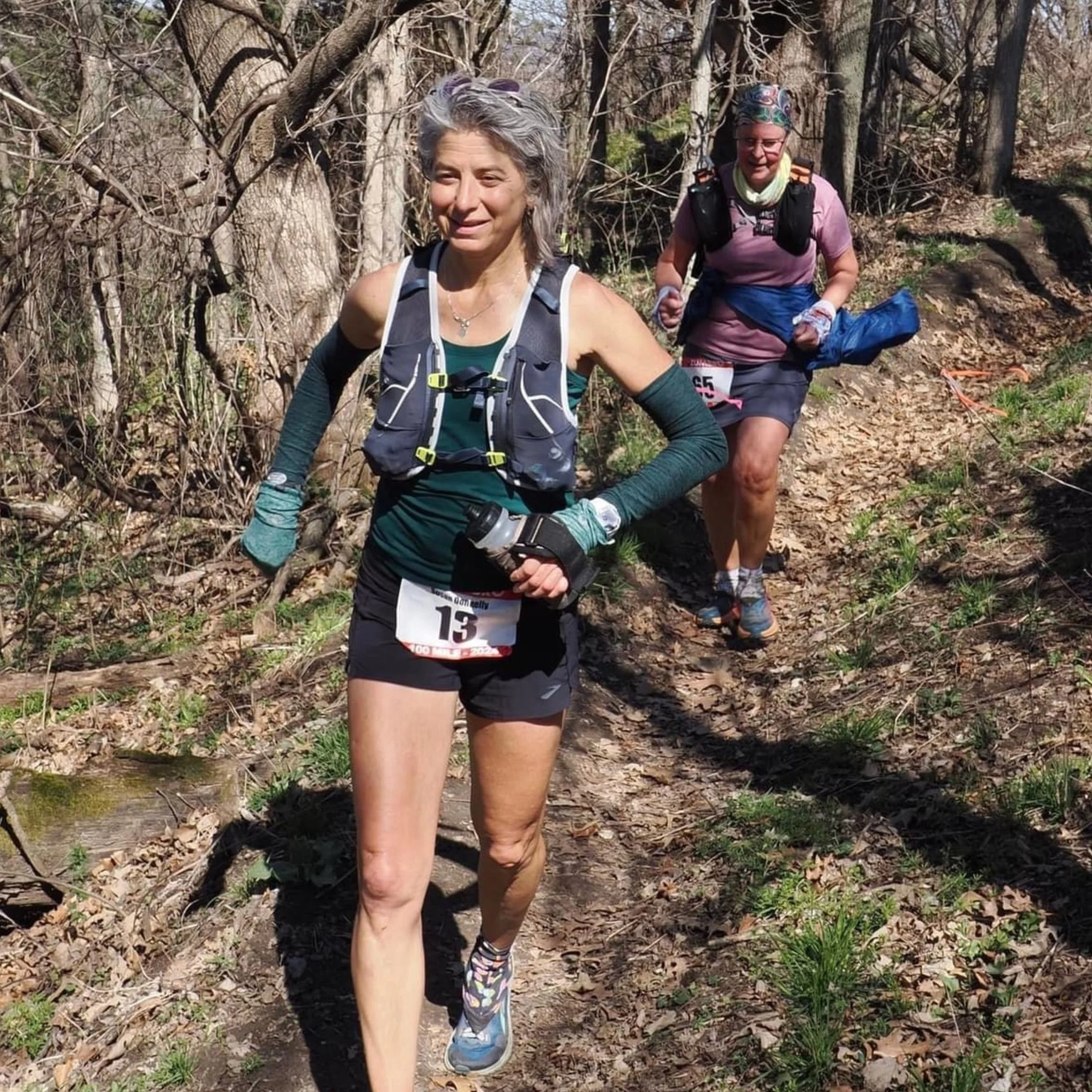
If you've ever stood at a starting line feeling like you didn't belong, or felt like you were out of your depth while everyone else knew what they were doing, this episode will change how you think about belonging forever.
I'm covering something that causes trouble in the background for a lot of ultra runners: that nagging feeling that you don't belong in a race, or maybe in ultra running at all.
You'll learn the two thought errors working against your self-image and three powerful ways to change your perspective on belonging forever. I'll share how I approached my first 100-mile race at Superior with beginner's mind and why that openness and curiosity made me unstoppable. You'll discover why waiting to feel like you belong keeps you stuck and how deciding you belong right now can free you to actually run the race you've been dreaming about.
If you’re loving the show, please take a moment to follow, rate, and review wherever you listen to podcasts today!
What You’ll Learn from this Episode:
Why feeling like you don't belong is a real problem that quietly undermines your racing and enjoyment.
The two thought errors about belonging that keep you comparing yourself to an idea that doesn't exist.
How to decide what belonging looks like to you instead of measuring yourself against "everyone else".
Why belonging is a feeling you create through decision, not something earned through achievements or external validation.
How to run in beginner's mind, approaching every race with openness, eagerness, and lack of preconceptions.
How to stop waiting for permission to belong that you don't need.
Listen to the Full Episode:
Featured on the Show:
If you’re loving the show, please take a moment to follow, rate, and review wherever you listen to podcasts today!
Episodes Related to Belonging in Ultrarunning:
Full Episode Transcript:
Welcome to Unstoppable Ultra Runner, the podcast for ultra runners who refuse to let anything hold them back. I’m your host, Susan Donnelly, veteran of over 150 100-mile races, and a coach who helps runners like you break through mental roadblocks, push past doubt, and run with confidence. Let’s go.
Welcome to Episode 40. Today, I'm covering something that causes a lot of trouble in the background for a lot of ultra runners. It's when you feel like you don't belong in a race, or maybe in ultra running at all.
And this might not seem like a real problem to address. I mean, it's not about your speed or DNFing or blisters or things like that. You'll get over it eventually, right? It's not something that other runners are really talking about. There's not a lot of conversation about it, so it doesn't seem like you should be having an issue or that it should be an issue. And it's not taking you directly out of races, so it just kind of feels like background noise, like a nuisance in your head. But it's actually one of the factors that makes it easier for you to rationalize quitting, either to quit putting in the effort or to quit the race entirely.
It affects your ability to enjoy the race, to have fun, to enjoy the camaraderie and the whole experience. It's a self-image issue that I coach on a lot because it quietly does a lot of damage. And if you want to run your best and have more fun at races, it's definitely worth cleaning up. And if you think you're the only one feeling this way, you're not, and that's exactly why I'm talking about it today. And the good news in all of this is that it's completely fixable.
So, here's why feeling like you don't belong is a real problem and why it's worth fixing. Let's say you start the race feeling like you don't belong. You stand at the starting line looking around at all the serious, fast-looking runners up front with all the muscles and everything, feeling out of place. We've all done that. And then the race starts, and the proof that you don't belong in the race starts showing up. Like the first miles go okay, but eventually, you start struggling and people begin passing you, lots of them. They look strong and confident and gritty and mentally tough, and you feel weak and worried by comparison.
You watch other runners in aid stations. They go grab their drop bags, get exactly what they need, talk to their crew like it's a NASCAR pit stop, like they've done this a hundred times. Everybody else is clearly having an easier time of it than you and knows what they're doing. They have the answer and you feel like you're the only one confused, wondering if you belong here. So your brain starts to bully you and you start thinking thoughts like, "Why did I ever think I could do this? I don't belong here. This race was a bad idea. I've got to get out of here."
And all of that feels so true, that negative cycle feels so true that you just end up putting an end to the race by dropping. You're clearly not meant for this type of race or this distance. You're way out of your depth. And so you promise yourself you'll never do this again. You think you need to feel like you belong before you can do big things, but you don't feel that way. So you wait to feel like you belong. And here's what that gets you.
You avoid signing up for races that you want to run because you don't feel like you belong there. It's out of your league. Maybe someday when you feel more confident, then you'll sign up. It shakes your confidence for anything hard. In the races that you do run where you muster enough belief to start, when you start to struggle, it seems like proof you don't belong there either. And you can start thinking like, I'm just not good at ultra running. What was I thinking by signing up for this race?
So you stick with easier, very familiar races and figure you'll get more experience and build your confidence until you feel like you belong in the bigger, longer, tougher races. So what ends up happening is overall, that cycle goes on forever because you're waiting to feel like you belong. So overall in ultra running, you end up staying small. You stick to races that feel super safe, where you're comfortable and you know you can handle them and there's no real challenge. So you end up not exploring or challenging your limits. You stay firmly inside your limits, and without realizing it, you create this idea in your head of your place relative to everyone else in sport.
It's like a party. Everyone else belongs at the party and is having fun and achieving things and doing great small talk. And you're outside that circle, like a foolish, uninvited guest who wandered in by mistake. And that becomes your identity, how you see yourself, your self-concept in your head. And you can stay stuck there. And it ends up making you dissatisfied with your ultra running. It takes the joy and possibility out of the sport, that sense of exploration and adventure that you got into it for. You never do what you got into ultra running to do, which is to see what you can do.
And you think it's your ability, your physical ability that's making you dissatisfied, but it's really how you see yourself and how you let that limit you. You got in the sport to grow and challenge your limits, and you're not letting yourself do that.
So, here's what's really going on. There are two thought errors working against your self-image here. What you think belonging looks like and how you think belonging happens. So, let's talk about those two.
The first one, what you think belonging looks like, that's where you assume that you have to be like everyone else to belong. How to know you're doing this is when you compare yourself to some unexamined idea that you have in your head of what a real ultra runner is. You think that everyone else is light years beyond you in experience and wisdom and training and physical ability and that they're all doing it right. And that it's, and this is key, that it's like everyone and then you.
You think you obviously stick out from the crowd as a novice who was delusional enough to think you belong in the race and that you're laughable and other runners are wondering why you're there. And you see proof of it everywhere. You're certain that you're the only one struggling and feeling this much discomfort. And everybody else has trained more and trained better and no one else is struggling like you are.
Here's something that's key. You think you're supposed to go into ultra running or a big race as an experienced runner or expert and step into it that way, right off the bat, to do what you read about elite athletes or other runners doing. Like have a mild challenge and flawlessly hit your goal. Everything works out okay and it's just upward from there. You think you're not supposed to have a learning curve. Only failures and weak runners need that. You're supposed to start out by succeeding and doing well and just get better from there.
So that's the first thought error, what belonging looks like. The second thought error is that you look outside yourself for permission to belong. You think someone needs to tell you that you belong or you need to be chosen, like sponsored or made a brand ambassador, or that an achievement like a podium finish or a 100-mile finish or a buckle will finally make you feel like you belong. So you wait for that to happen before you feel like you belong.
So the real solution here is to fix those two thought errors, those two assumptions you have in your head about belonging. And I'm going to give you three powerful ways to change your perspective on belonging forever.
The first is to decide what belonging looks like to you. We often want belonging without thinking about what it actually is. We just feel like we don't have it and everybody else clearly does. But right now, you're comparing yourself to an idea of belonging that doesn't actually exist. You don't have to be like everyone else and do what they're doing to belong. And I'm not saying the conventional wisdom, "just be yourself, don't try to be like the rest of the crowd." What I'm saying here is actually more powerful.
I want you to think about it this way, to realize that you don't have to be like everybody else because there's not an everybody else to be like. There's not a monolithic everyone else. Ultra runners are a whole rainbow of experience and knowledge and accomplishment and bodies and personalities and training, all trying to do the same thing. And you're not the only one struggling. You may be the only one in your vicinity or your viewpoint in a race who looks like you're struggling at that moment, but you don't know what other people are feeling and thinking.
And having coached hundreds of hours, I can tell you, it's common to look at someone running ahead of you or passing you and create this absolute fairy tale in your mind of how confident they are and how good they feel compared to you, when you don't actually have any idea what they're feeling. It's a completely made-up story in your mind.
Think about this. Even if another runner got more training miles in than you, it doesn't mean that they got the quality training they needed, or the hill work or the speed. It doesn't mean that how they trained makes their training any better or yours any worse. And it's a huge thought error to believe that everybody else is doing it right because there's no, first of all, there's no everyone else, and second of all, there's no universal right. What works for you may not work for another runner. Everybody's body is different. So the right way doesn't even exist.
Here's what I mean. A client recently told me about joining a group run where everything was going well for a couple of kilometers, but she was running further than everybody else on that day, and their pace at that moment was too strong for her total distance. So she told them, "Go ahead, no problem, go ahead." And she stuck to her own slower pace, the pace that was right for her. And a couple of kilometers later, she actually caught back up to them because they'd slowed down. They were starting to feel the distance.
Their faster pace wasn't necessarily right for them either, but her pace was still right for her and she finished her long run beautifully. As it so happened, she finished with them. So there's no one right way to do it. There's your right way.
Here's an exercise. Try this. When you think of everyone, who is that? I mean, which specific person? Because if everyone is the same, any runner should be everyone. Like who is everyone? Pick that runner. You can't do it because everyone is different. That, quote unquote, "everyone" exists only in your mind as a figment of your imagination. You can do the same for right. What is doing it right? Does everyone who has a good race or succeeds do exactly that? No. Even if they succeed beyond their wildest dreams, everyone's race is different. So there's no right way to do it in ultra running either.
When you catch yourself thinking everyone else knows what they're doing, stop. Who is everyone? Name them. You can't, because, quote unquote, "they" don't exist.
The second way to change your perspective on belonging is this. You can simply decide you belong. In fact, if you're going to feel like you belong, you have to decide this. Belonging is a feeling. It's not a buckle or a secret handshake or a state of being. It's an emotion, and it's an emotion that you have to create. Belonging is simply a decision that you make. Nothing and no one outside you can give you that feeling, even if they wanted to. I can't give you that feeling. You have to decide that you belong.
And that's good news because it means that you don't have to wait on anyone or anything to feel you belong. You make that choice and you can do it right now. Think about this. Even if someone told you that you belonged, you'd have to believe they were telling the truth. Imagine a friend insisting that you belong. You still might not believe them because you know they want you to feel happy. And even if you're chosen as like a brand ambassador, you have to decide that's what makes you belong. You have to feel that's enough. You're still creating that feeling.
And even if you finish your first 100-miler or whatever you think it will take to belong, you still have to decide that's enough. Crossing the finish line doesn't suddenly, magically make you feel like you belong. It doesn't descend from the heavens or anything like that. You have to decide that now that you've crossed the finish line, you belong. It's a decision you make. You decide you belong. You create that feeling for yourself. No one and nothing can actually do it for you. But that means you can decide right now, this instant, or before you ever run an ultra, that you belong.
Here's a simple exercise to practice this. Find all the reasons that you do belong. Like sit down and find them, write them out. When I ran my first 100 at Superior 100, I honestly didn't know what to expect. I could have felt like I didn't belong, but I decided I did. I'd done what I guessed was enough training to finish, or at least the best I could do in the time I had, and it might not have been enough, but I wanted to test it and find out. And I loved that area of the country and badly wanted to see as much of that trail as I could. I belonged there simply because I loved being there.
And I'd always wanted to run a 100, and I had created this opportunity for myself. I had grabbed an opportunity that was an opening for me. And I wanted so badly to experience this distance that I'd always wondered about, had dreamed of. I wanted the adventure. I felt like this was what I was made for. Like I had that theory in my head, like I was sure, because I could do shorter distances, but I always felt there was always something more for me somewhere. So even though I hadn't run the distance yet, I thought it might be like my ultra running home, the distance where I belonged.
So my reasons for belonging: I wanted it badly. I'd trained for it. I loved the place and I'd grabbed the opportunity. That was enough. Seriously.
The third way to change your perspective on belonging sounds really mild, but it's actually very ninja. And that's this. Don't make belonging a problem. Make it normal to feel like the new kid. And here's how: Run in beginner's mind. There's a concept from Zen Buddhism called Shoshin, meaning beginner's mind. It refers to having an attitude of openness, eagerness, and lack of preconceptions when studying, even at an advanced level, just as a beginner would.
So think about what that means for ultra running. No one, no one, actually belongs because we're all, every one of us, perpetual beginners in some way. No matter how fast we run, no matter what we've achieved, every race is new and different from the ones before for all of us. This is exactly how I completed that first 100-mile at Superior. I lined up in a severe thunderstorm no less with like about 15 people in remote northern Minnesota having no idea what to expect. This is way before the internet.
It looked like I was the only novice, but I didn't let it bother me and I really didn't have a chance to let it bother me with the storm coming. But I had no expectations about finishing. I just wanted to see as much of the trail and do as much of a 100-mile race as I could. I figured this would be a first try and I'd see what it was like. The RD started us and I hung on to everyone as long as I could, but when I eventually, after a bunch of miles, ended up alone, I was still eager to see what was ahead and have this adventure. I couldn't wait to see what was around the next corner. I was totally open to making mistakes and just being last. I was just happy to be there, experiencing it.
Like I'd get to an aid station and I would literally ask them if I could go on because I didn't know how cutoffs worked. And they would smile or chuckle and say, "Yes," and I was always surprised and delighted to keep getting the go-ahead. Like, "Seriously, you're giving me permission to go on?" I didn't know if I was last, but honestly, I never thought about it, not once. It just didn't occur to me to worry about it or turn it into a problem. I was getting to run this amazing race, something I dreamed of. It felt like a true, satisfying adventure to be the only runner in sight for miles on end.
And I felt the same way coming into the finish, amazed that I'd made it, and I really didn't have an expectation either way. So I was just delighted to do it and get to see all of the trail on my first go-round. And as the definition says, even at advanced levels, I've stayed in beginner's mind ever since. It is way more fun that way, and even after hundreds of ultras and 153 100-mile races, I'm still learning new things, which is a complete joy. That openness, that curiosity, that lack of preconceptions, that's what beginner's mind gives you, and it makes you unstoppable.
It's the same for everybody. Even in races I've run 20-plus times, like Superior 100, the circumstances are always new for all of us. We're all beginners at today's version of that race. No one has the right answer. We're all experimenting, running our best guess at what will work. When you run with beginner's mind like this, every race is a new race. And there's no one who belongs more or less because everyone is new at this race today.
Here's an exercise. Try this. Think about your next big race. How would you plan it and run it if you approached it from beginner's mind, without wondering if you belong there? What would change if you see that everybody is a beginner for that race on that day? You and everyone else starting that race are beginners to the experience ahead on that day. Ask yourself, what would you be curious about instead of worried about? What would you want to learn or experience? How would you approach struggling, as a problem or as part of the adventure?
These three ways of changing your perspective on belonging can change how you think about it forever. They clear that obstacle out of the way and free you to focus on the actual running of the race and enjoying the experience, to be present in the race rather than comparing yourself to the other runner ahead of you to see whether you belong.
So no more standing at the starting line feeling like you don't belong, no more dropping because your brain convinces you everyone else has it figured out but you, and no more feeling like everyone else knows how to do it but you. You stand at that starting line differently. You're not looking around wondering if you deserve to be there, you're looking ahead, eager to see what happens. You keep that joy and delight and eagerness of exploring what you can do. You stop waiting for permission to belong that you don't need. You stop shrinking yourself to fit some imaginary standard that doesn't even exist.
You can line up at that race you've been dreaming about and actually run it, not spend the whole time prosecuting yourself for being there. And you can be a beginner at a brand new event or distance, even after years in this sport, and love that because beginner's mind isn't about inexperience, it's about openness and possibility and the pure pleasure of not knowing what's ahead. That's what you came into ultra running for in the first place, to see what you can do.
So decide you belong, sign up for that race, line up at that start line, and run it like you belong there because you do. All right, you all, that's this week's episode. Thanks for listening. And if you know someone who could use this, please share it with them. It might be exactly what they need to hear. See you all next week. Bye.
Thanks for listening to Unstoppable Ultra Runner. If you want more ultra talk, mindset tools, and strategies for running with confidence, visit www.susanidonnelly.com. This podcast receives production support from the team at Digital Freedom Productions. That’s it for today’s episode. See you next week.
Enjoy the Show?
Don’t miss an episode, follow the podcast on Apple Podcasts, Spotify, RSS, or wherever you listen to podcasts!